P!K!

Since 1919 · Riga

History of P!K!

Five fraternities. One shared voice. From the founding of the University of Latvia to the present — a story of cooperation, interrupted activity and a tradition restored.

Start reading

1919 — today

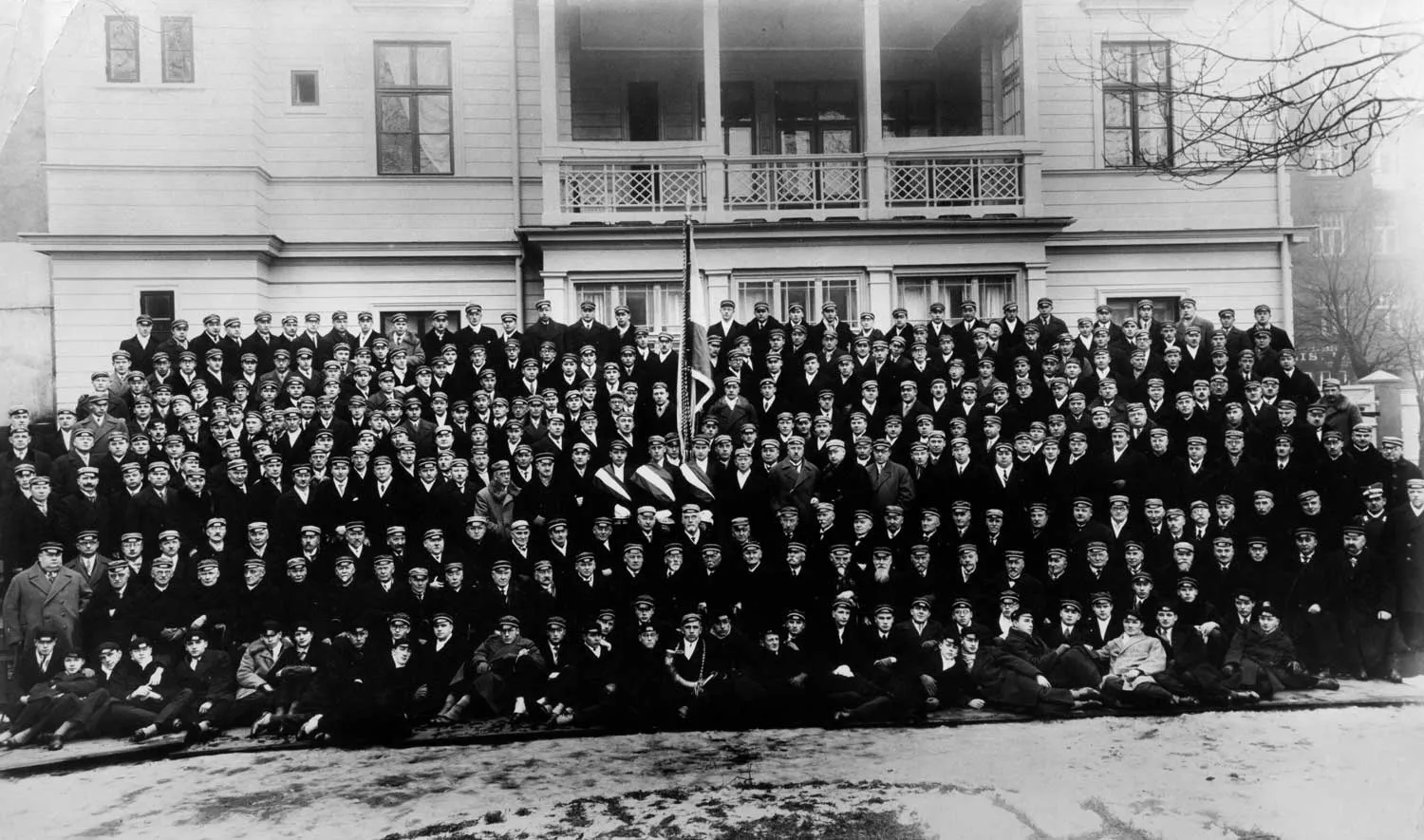
Historical black-and-white group photograph of Selonija members in caps in front of a two-storey house.
Members of Selonija. Historical photograph.

Moments in history

1919

Five fraternities, a shared beginning

On 27 September, the day before the University of Latvia opens, representatives of five Latvian fraternities meet in Riga.

Read this chapter

1920

Cooperation gains a name

The union takes the name Prezidiju Konvents and adopts common rules. A different fraternity takes the chair each semester.

Read this chapter

1940

Activity is brought to a halt

On 13 July, the Soviet occupation authorities close the fraternities and their alumni societies, confiscating their property.

Read this chapter

1990

Together again

On 15 March, fifteen fraternities restore the work of the Presidium Convent in Latvia.

Read this chapter

Today

The story continues

Shared traditions live on through cooperation, academic life and the generations that follow.

Read this chapter
Chapter 011919

Five fraternities, a shared beginning

On 27 September, the day before the University of Latvia opens, representatives of five Latvian fraternities meet in Riga.

Cooperation among Baltic fraternities had already begun in Tartu and at Riga Polytechnic. The new Latvian state and its university, however, needed a new basis for working together.

On 27 September 1919, representatives of Lettonia, Selonija, Lettgallia, Talavija and Fraternitas Moscoviensis — later Fraternitas Lettica — met in Talavija’s convent quarters. They agreed to wear their colours publicly again at the university’s opening. This meeting is regarded as the founding of P!K!.

Cooperation began while Latvia’s War of Independence was still being fought. Fraternity members served in the Separate Student Company and later the Student Battalion, balancing their studies and convent life with the defence of the country.

Chapter 021920

Cooperation gains a name

The union takes the name Prezidiju Konvents and adopts common rules. A different fraternity takes the chair each semester.

In autumn 1920, the union adopted the name Prezidiju Konvents — P!K!. On 13 October, the university’s Organising Council approved the Common Fraternity Comment, establishing the basis of the union’s work.

Each fraternity had one vote. The presiding officers came from a single fraternity, with the chair passing in seniority order for one semester at a time. This rotation became a principle of shared responsibility.

The interwar years saw the establishment of the P!K! court, procedures for the Court of Honour, a sports section and a men’s choir. The union became a place for fraternities to manage their relationships and pursue common projects.

Chapter 031940

Activity is brought to a halt

On 13 July, the Soviet occupation authorities close the fraternities and their alumni societies, confiscating their property.

Following the Soviet invasion of Latvia on 17 June 1940, the fraternities’ public activity was soon ended. On 13 July, the occupation authorities closed the fraternities and their alumni societies.

Between 1919 and 1940, P!K! had been active for 42 semesters. In its final semester it comprised 19 Latvian and two Russian fraternities, with Fraternitas Livonica presiding.

In the decades that followed, fraternity traditions also continued outside Latvia. Fraternities founded in exile would later become part of the restored fraternity life in Latvia.

42

semesters of P!K! activity between its founding and 1940.

Chapter 041990

Together again

On 15 March, fifteen fraternities restore the work of the Presidium Convent in Latvia.

On 15 March 1990, fifteen fraternities restored P!K!. After a half-century interruption, they once again had a common union in Latvia.

Other fraternities joined the renewed cooperation. Gersicania and Fraternitas Imantica were admitted in 1991, Fraternitas Cursica in 1992 and Fraternitas Vanenica in 1993. All four had been founded in Germany in 1947.

Restoration brought together pre-war experience, traditions preserved in exile and a new generation of students.

Chapter 0520 fraternities

The story continues

Shared traditions live on through cooperation, academic life and the generations that follow.

The Presidium Convent brings student fraternities together and represents their shared interests. The presiding convent changes each semester, continuing the rotation established in 1920.

Behind every name and set of colours are people, friendships and individual experiences. This history can also be explored through each fraternity’s own story, from the oldest convents to those founded in exile.

Explore the fraternities

Words with a history

Open a term to discover more.

P!K!

Prezidiju Konvents, the Presidium Convent — a union of student fraternities in which each fraternity is represented by its presidium.

Komāns

A fraternity’s code of customs and rules of social life, also called the comment. The Joint Fraternity Comment, A!K!K!, governs relations between fraternities.

G!T! · P!K!T!

The Court of Honour and the Court of the Presidium Convent — historical bodies for dealing with matters of honour and breaches of the common rules.

Curious to go deeper?

The complete historical text, with events, people and details.

Read the full history

On 27 September 1919 in Riga, a union of student fraternities was founded at the University of Latvia: the Presidium Convent of the University of Latvia, P!K!. Through its institutions, namely the Presidium Convent (the general assembly of the presidium members of all the student fraternities belonging to P!K!), the G!T! and the P!K!T!, it adopted decisions and issued rules, and so guided and regulated the common life of all the fraternities and the relations among them. P!K! was thus the highest governing body of the student fraternities of the University of Latvia.

The beginnings of P!K!

The oldest Latvian and other student fraternities that joined P!K!, and likewise the unions of these fraternities (the Chargierten-Convents), had existed earlier, before the University of Latvia was founded, at the University of Tartu or at the Riga Polytechnic Institute. The German fraternities of the University of Tartu, Curonia (1808), Estonia (1821), Livonia (1822) and Fraternitas Rigensis (1823), founded a union of fraternities as early as 1832 (in its final form in 1841): the Chargierten-Convent of Tartu, the Ch!C!. Later the Ch!C! admitted further German fraternities. On 10 May 1882 the first Latvian student fraternity was admitted to the Ch!C!. This was Lettonia, founded on 19 February 1870. After a sharp conflict with the German fraternities, Lettonia was expelled from the Ch!C! on 25 October 1905. On 8 February 1899 a second Latvian fraternity, Lettgallia, was founded in Tartu; the Ch!C! did not admit it. The Ch!C! of Tartu was dominated by the German fraternities, and they did not wish to admit fraternities of other nationalities.

The German fraternities of the Riga Polytechnic (later the Riga Polytechnic Institute), Fraternitas Baltica (1865) and Concordia Rigensis (1869), founded the Riga Chargierten-Convent, the C!C!, in 1871; the third German fraternity, Rubonia (1875), was admitted as soon as it was founded. The Riga C!C! admitted the Russian Borysthenia (1876, closed in 1880), the Polish Arconia (1879), the Russian Fraternitas Arctica (7 November 1880) and the Polish Veletia (1883). This weakened the dominance of the German fraternities in the Riga C!C!. On 24 November 1880 the first Latvian student fraternity in Riga, Selonija, was founded; the C!C! admitted it only on 24 November 1897. After that the C!C! admitted the Estonian fraternity Vironia (1900). The second Latvian student fraternity in Riga, Talavija, was founded on 14 December 1900 and admitted to the C!C! on 2 May 1907. The Riga C!C! existed until 1918. With the founding of the Ch!C! and the C!C!, the rule had arisen in Tartu and Riga that every newly founded student fraternity first needed the recognition of the Ch!C! or the C!C!, and only then was the new fraternity confirmed by the leadership of the university. So in Tartu and Riga no fraternity could exist and openly wear its three colours unless it was recognised by the Ch!C! or the C!C!. On 4 December 1873 the first cartel (an agreement of satisfaction and friendship) was concluded between the Ch!C! of Tartu and the C!C! of Riga. With it the Ch!C! recognised the C!C! as its equal. Before the Latvian state was founded there were also these Latvian student fraternities: Fraternitas Moscoviensis, founded on 20 October 1902 at the University of Moscow, which later, after moving to Riga, changed its name in 1920 to Fraternitas Lettica. The fraternity Latvia was founded at the Veterinary Institute of Tartu on 17 February 1917, and the fraternity Ventonia at the University of Tartu on 21 November 1917. These three fraternities did not enter into any union with other fraternities. The First World War greatly disturbed the work of the student fraternities, and the Russian Revolution paralysed it altogether. Because of the war the Riga Polytechnic Institute was moved to Moscow in 1915. The students and the fraternities followed the institute. In the autumn of 1918 Selonija and Talavija had returned from Moscow to Riga and had already organised the active life of their convents there.

The founding of P!K!

On 18 November 1918 the Latvian state was founded. At the same time the 8th Army of Germany, which had occupied the territory of Latvia, was withdrawing, and the troops of Soviet Russia followed on its heels. The young Latvian state had to organise its armed forces in very hard conditions. The Latvian student fraternities were the first to answer the call of the Provisional Government and to join the armed forces of the state. On 9 December 1918 the general meeting of Selonija resolved that all members of Selonija were obliged to join the Latvian army. On 12 December 1918 an extraordinary general meeting of Talavija passed the same resolution for all members of Talavija. On 20 December 1918 Selonija and Talavija founded the Separate Student Company. The other Latvian student fraternities were not in Riga at the time and could not take decisions about the Student Company. Those members of Lettonia, Lettgallia and Fraternitas Moscoviensis (that is, Fraternitas Lettica) who were then in Riga joined the Student Company. The company chose as its commander Captain Nikolajs Grundmanis of Selonija, and as his adjutant First Lieutenant Markus Gailītis of Talavija. The Student Company was a disciplined fighting unit that obeyed the orders of its commanders, but important decisions were discussed and taken at meetings of the fraternities’ representatives (the seniors). The first meeting took place in Riga as soon as the company was founded, when its commanding officers were chosen. The second took place on 17 February 1919 in Rudbārži, when it was decided to include the Student Company in Kalpaks’ battalion, and the third at the front, on Ložmetējkalns (Machine Gun Hill), in connection with the German coup in Liepāja on 16 April 1919. The historic Separate Student Company was the test, and the victory, of the national principles of the Latvian student fraternities. The Latvian Higher School (Latvijas Augstskola, as the University of Latvia was first called) was founded and opened on 28 September 1919. It began its work in hard conditions: not a year had passed since the founding of the Latvian state, the country had not yet been cleared of enemy troops, and the War of Independence was still going on.

Pēteris Ķevietis, a student of agriculture and commilito of Talavija and a former soldier of the Student Company, proposed restoring the C!C! at the Latvian Higher School. Lettonia, which had moved to Riga, and Selonija agreed with the idea, and the representatives of the fraternities began to confer about it. As the day of the opening of the Latvian Higher School drew near, members of the fraternities concluded that the fraternities needed to unite in order to defend their common interests and to regulate their relations. On 27 September 1919, in the convent quarters of Talavija in Riga, the representatives of the Latvian student fraternities then in Riga, Lettonia, Selonija, Lettgallia, Talavija and Fraternitas Moscoviensis (later Fraternitas Lettica), met for a joint conference. At this conference, as the representative of Talavija had specified, it was decided that on the opening day of the Latvian Higher School, 28 September 1919, all five of these Latvian student fraternities would uncover their colours, the open wearing of which had been interrupted during the First World War. This day, 27 September 1919, is to be regarded as the founding day of P!K!. The five Latvian student fraternities named are the founders of P!K!. In the semester of 1919 further meetings of the fraternities’ representatives were rare. A few days after the opening of the Higher School, on 8 October 1919, Bermondt’s attack on Riga began. The Organising Council of the Latvian Higher School suspended teaching and called on the students to take up arms. “Bear in mind: if there is no Latvia, there will be no Latvian Higher School and no culture of ours” – so ended the Organising Council’s appeal to the students. Those who had not yet been called up joined the newly organised Student Battalion, which played a notable part in defending the bridges of Riga against Bermondt’s attack and was commanded by Lieutenant Colonel Pauls Bruņinieks of Talavija. The years 1919 and 1920 were hard ones in the life of the fraternities. The fraternities had no active, matriculated students who were not in the army, and they could not elect officers from among active students. Officers could be elected only once it had been decided that all those whose studies had been interrupted by military service counted as active members of the convent. Cooperation among the fraternities on the foundations of P!K! had begun on 27 September 1919, but because of the war the question of how P!K! was to be legally constituted was settled only about a year later. It should be noted that at first there was talk of restoring the Chargierten-Convent, the C!C!, and that the name “Presidium Convent”, P!K!, appears only in the 2nd semester of 1920. In the 1st semester of 1920 the work of building up the C!C!, or rather P!K!, went on. On 18 May 1920 the representatives of all five Latvian fraternities met for a conference, at which it was decided to set up a special commission to draft a comment for the C!C!. The semester at the Higher School ended on 12 June, but the commission worked intensively throughout the summer break and produced a draft of the “Comment of the United Fraternities of the Latvian Higher School”.

The chronicle of P!K! to 1940

In the 2nd semester of 1920 it was decided that the union of fraternities would be called the Presidium Convent, P!K!. In this semester P!K! adopted the “Comment of the United Fraternities of the Latvian Higher School” (K!K!K!), and the Organising Council of the Latvian Higher School approved the comment at its meeting of 13 October 1920. P!K! was legalised; the senior of the provisional presidium was V. Dūms of Talavija and the secretary B. Einbergs of Selonija. The text of the K!K!K! consisted of 18 sections and was signed by the representatives of the fraternities Talavija, Lettonia, Selonija, Lettgallia and Fraternitas Lettica. As can be seen, P!K! still consisted of five fraternities, as at the very beginning. It had been decided not to admit fraternities of other nationalities to P!K!. After repeated discussions this decision was revoked; Latvian alone remained the language of business in P!K!, but until 2 September 1921 other languages were also allowed in debate. Once this decision had been taken, two German fraternities applied and were admitted to P!K!: Fraternitas Baltica and Concordia Rigensis. It was decided that P!K! decisions would be taken by a simple majority of votes, each fraternity having one vote. On 20 October 1920 P!K! resolved that in future the presidium of P!K! must come from a single fraternity and that the fraternities would preside in turn, beginning with the oldest, each for one semester. In connection with this decision P!K! fixed the seniority of the fraternities, and at one of the next meetings the provisional presidium handed the presiding of P!K! to the presidium of Lettonia. For settling matters of honour, special coramage hours were fixed once a week; the first was held on 24 November 1920. Later these hours were held once a fortnight. It was decided that the fraternities would officially receive guests once a month.

In the 1st semester of 1921 the convent of Selonija presided (senior P. Dulbe, vice-senior J. Dute, secretary B. Pavasars). In this semester the German fraternities admitted earlier, Fraternitas Baltica and Concordia Rigensis, took part in the meetings of P!K! for the first time. In this semester P!K! admitted the German fraternities Rubonia and Fraternitas Rigensis and the Latvian fraternity Latvia. The student society Imanta had applied for admission, but it was rejected because the society lacked a proper constitution.

In the 2nd semester of 1921 the convent of Lettgallia presided. P!K! grew by one fraternity, for the Latvian fraternity Ventonia was admitted. P!K! adopted a decision recognising the expulsions once carried out by the Riga Chargierten-Convent (C!C!). P!K! resolved that the archive of the Chargierten-Convent of the former Riga Polytechnic Institute was to be handed over to P!K! for safekeeping. To further contact among them, all the fraternities held a reception for guests in November, the “open quarters for free Burschen”.

In the 1st semester of 1922 the convent of Talavija presided (senior V. Dūms, vice-senior V. Saliņš, secretary V. Alksnis). In this semester P!K! admitted the German fraternity Fraternitas Pharmaceutica Rigensis. On 23 March 1922, on the basis of a draft comment, the Court of the Presidium Convent, the P!K!T!, began its work. The P!K!T! consists of representatives of all the fraternities in P!K!, the judges of the P!K!T!, and their task is to establish breaches of the Comment of the United Fraternities, the A!K!K!, and to punish the guilty. The P!K!T! is led and convened by the presidium chosen by the meeting of the court’s judges at the beginning of each semester. The sittings of the court are open or closed. All students and philisters who have vouched for the A!K!K! have the right to attend the general sittings. Only the members of the P!K!T!, the judges, take part in the closed sittings, and they decide cases by a simple majority. The penalties of the P!K!T! are: a warning, a reprimand, a severe reprimand, a doubly severe reprimand and expulsion. P!K! sent its representative, B. Einbergs of Selonija, to the student congress in Leipzig.

In the 2nd semester of 1922 the convent of Fraternitas Lettica presided (senior E. Rempe, vice-senior J. Krēbss, secretary N. Linde). P!K! grew by one fraternity, for the Russian fraternity Fraternitas Arctica was admitted. The Jewish student society Vetulia applied but was not admitted. In this semester the composition of P!K! changed. A conflict over the language of debate and the number of votes had arisen earlier between the German and the Latvian fraternities in P!K!. After the German fraternities’ proposal on this question was rejected, they, that is Fraternitas Rigensis, Fraternitas Baltica, Concordia Rigensis, Rubonia and Fraternitas Pharmaceutica Rigensis, left P!K!. The German fraternity Curonia asked for its application to be returned. In this semester the Comment of the United Fraternities, the A!K!K!, was adopted in its final form; it was drawn up on the basis of section 7 of the K!K!K!. P!K! sent its representative, B. Einbergs of Selonija, to the conference of nationally minded students in The Hague.

In the 1st semester of 1923 the convent of Latvia presided (1st officer A. Ozols, 2nd officer A. Jaunrubenis, 3rd officer J. Kalniņš). P!K! sent its representative, B. Einbergs of Selonija, to the conference of students of the Baltic states in Tartu. To settle fully how matters of honour were to be decided, the Comment of the Court of Honour and the Court of Arbitration was adopted in its final form. Its basic principles are these. Every student who vouches for the K!K!K! and feels insulted by another student or philister who vouches for it must demand satisfaction from him by challenging him within a fixed time, after which the parties may no longer meet. The state of being parties can be ended by a settlement or through the Court of Honour. Any student or philister who has vouched for the A!K!K! may act as mediator in a settlement. It is the duty of the Court of Honour to settle the matter of honour between the two parties. The G!T! is made up of judges of honour elected by each fraternity, and it holds its sittings at a place and time fixed by P!K!. To have the matter settled, the parties must appear on one of its first sitting days after the challenge. Each party chooses one judge of honour, and the two judges agree on a third, who is the chairman of the G!T!. After the parties and witnesses have been questioned, the judges of honour confer. The statements of the parties and witnesses are taken down by the chairman of the G!T!, who, on the basis of the court’s decisions, sends the minutes within a fixed time to the P!K!T!, which decides the penalty. Insults between a student who vouches for the A!K!K! and a philister are decided in the Court of Arbitration under the rules of the G!T!, and the breaches found are reported to the P!K!T!. Deciding a matter of insult between members of one fraternity falls to the internal G!T! of that fraternity.

In the 2nd semester of 1923 the convent of Ventonia presided. In this semester P!K! admitted the Latvian fraternity Beveronija. On 16 October 1923 representatives of all the convents met for a conference on sport, which can be regarded as the foundation of the Sports Section of the Presidium Convent, organised later and still in existence.

In the 1st semester of 1924 the convent of Lettonia presided (1st officer H. Kiršentāls, 2nd officer N. Karlsons, 3rd officer A. Radziņš), because the convent of Fraternitas Arctica declined to preside for technical reasons. At the end of the semester P!K! decided that German and Russian could also be used in debate, after which the German fraternity Curonia was admitted to P!K!. The fraternities Fraternitas Rigensis, Fraternitas Baltica, Concordia Rigensis, Rubonia and Fraternitas Pharmaceutica Rigensis were likewise readmitted to P!K!. It was decided that, to settle disputes of an intimate nature, Councils of Confidence, later Courts of Confidence, were to be introduced; they were given the powers of the P!K!T!, and their judgments could not be appealed.

In the 2nd semester of 1924 the convent of Fraternitas Arctica presided (senior R. Murasovs, vice-senior A. Linde, secretary A. Melbārds). In this semester the decision on the use of German and Russian in debate was extended to the bodies subordinate to P!K!. P!K! decided to found the Men’s Choir of the Presidium Convent (P!K!V!K!). A representative of P!K!, G. Celmiņš of Selonija, was sent to the congress of the International Confederation of Students (Confédération Internationale des Étudiants) in Warsaw. To deepen friendly relations it was thought desirable to hold a “Commers of the Nations”, that is, a joint commers of all the fraternities in P!K!. For lack of suitable premises, this decision was never carried out in the whole time that P!K! was active.

In the 1st semester of 1925 the convent of Selonija presided (senior P. Pētersons, vice-senior G. Celmiņš, secretary K. Ozoliņš). P!K! admitted the Latvian fraternity Tervetia. When the State Elder of Estonia came to Latvia, members of P!K! took part in his ceremonial welcome and held a torchlight procession in the guest’s honour. On 9 June 1925 the Latvian student fraternities of P!K! presented a flag to the Armoured Train Division (later Regiment), so affirming the bond of ideals between the fraternities and the national army. In the evening a joint reception for soldiers and fraternity members was held in the convent quarters of Lettonia. In August 1925 P!K! officially took part in the funeral of Latvia’s first foreign minister, Z. Meierovics, a philister of Talavija.

In the 2nd semester of 1925 the convent of Lettgallia presided (senior E. Jansons). In this semester Talavija publicly marked the 25th anniversary of its founding. At the celebration of Talavija’s 25 years, in the hall of the Riga Latvian Society, the P!K! Men’s Choir sang in public for the first time.

In the 1st semester of 1926 the convent of Talavija presided (senior A. Raudseps, vice-senior G. Grambergs, secretary T. Jansons). In this semester P!K! admitted these Latvian student fraternities: Fraternitas Vesthardiana on 27 April 1926 and Philyronia on 11 May 1926. On 26 March 1926 the inaugural concert of the P!K! Men’s Choir took place. It was decided that permission for members of foreign fraternities to wear their colours in Latvia is given in each separate case by the presidium of P!K!. In this semester the President of Finland, Relander, came to Latvia, and members of P!K! took part in his ceremonial welcome, holding a torchlight procession as well, for which P!K! received letters of thanks from the rector of the University, the Ministry of Foreign Affairs and the church administration. By old tradition the Latvian student fraternities in P!K! took a lively part in the 6th General Song Festival, held in Riga in the summer.

In the 2nd semester of 1926 the convent of Fraternitas Lettica presided (senior M. Upīte, vice-senior J. Drande, secretary G. Martinsons). On 9 November 1926 P!K! admitted the Latvian student fraternity Fraternitas Metropolitana. In this semester the rules of the P!K! Men’s Choir were adopted.

In the 1st semester of 1927 the convent of Latvia presided (1st officer A. Ozols, 2nd officer V. Šēfers, 3rd officer J. Landorfs). P!K! excluded the fraternity Ventonia for 5 years, counting from 1 April 1927; from then on Ventonia remained outside P!K!, and its members counted as guarantors of the P!K! comment. The German student fraternity Fraternitas Pharmaceutica Rigensis changed its name to Gotonia, which P!K! confirmed. Persons who had earlier studied at the University of Latvia, the University of Tartu or the former Riga Polytechnic Institute were also allowed to vouch for the A!K!K! with individual fraternities. To regulate how it appeared in public, P!K! adopted a detailed order of ceremonial.

In the 2nd semester of 1927 the convent of Gotonia presided (senior H. Jansons, vice-senior H. Šillers). On 8 November 1927 P!K! admitted the Latvian student fraternity Fraternitas Academica Latviensis, which later, with the permission of P!K!, shortened its name to Fraternitas Academica. Because films glorifying communism were being shown in the Riga cinemas “Palladium” and “Astoria”, P!K! declared a boycott of these cinemas for 1 year. In this semester Fraternitas Lettica marked its 25th anniversary.

In the 1st semester of 1928 the convent of Tervetia presided (senior J. Spilva, vice-senior J. Šumans, secretary L. Pillups). P!K! adopted rules on admitting student organisations to P!K!. They laid down that all members of student organisations founded on the principles of the fraternities must vouch for the A!K!K! with one of the existing fraternities. A fraternity was given the right to refuse a request to vouch for the comment. A student organisation can be recognised by P!K! no earlier than 3 years after P!K! has been notified that it has vouched for the comment. Of student organisations wishing to join P!K! it is required that their principles do not conflict with the laws of the state or with the A!K!K!.

In the 2nd semester of 1928 the convent of Beveronija presided (senior H. Lielmanis, vice-senior N. Janners, secretary O. Zaļaiskalns). P!K! readmitted the Latvian student fraternity Ventonia, remitting the part of the penalty not yet served. On 20 November 1928 P!K! newly admitted these Latvian student fraternities: Fraternitas Lataviensis, Patria and Fraternitas Livonica. In this semester the senior of P!K! required the representatives of the German convents to speak Latvian at the meetings of P!K!, pointing out that what was said in German would not be minuted. Apart from the work of P!K!, it should be noted that in this semester, on 16 November 1928, a union of the philisters’ societies of the Latvian student fraternities was founded under the name Union of Philisters’ Societies (Filistru Biedrību Savienība, F!B!S!), with which P!K! had to cooperate from then on.

In the 1st semester of 1929 the convent of Philyronia presided (senior F. Bite, vice-senior V. Mateus, secretary A. Pētersons). In this semester P!K! consisted of 23 student fraternities (16 Latvian, 6 German and 1 Russian), whose members, not counting philisters, numbered 1,631, with 510 guarantors of the comment. As P!K! would be able to look back on 10 years of existence in the following semester, it was decided to publish a book describing the work of P!K!, with brief information about each fraternity and pictures of each fraternity’s colour insignia. The presidia and Oldermänner of the Latvian fraternities of P!K! took part in the celebration of 10 years of the Armoured Train Regiment. In June 1929 the fraternities of P!K! took part in welcoming King Gustaf V of Sweden to Riga.

In the 2nd semester of 1929 the convent of Fraternitas Metropolitana presided (senior V. Saulītis, vice-senior J. Graudiņš, secretary E. Arnoldijs). In this semester P!K! took part in the annual celebration of the Armoured Train Regiment, and the Minister of War, A. Ozols, solemnly fastened to the regiment’s flag, on which the arms of the first 9 fraternities already flew, the joined ribbons of 7 new fraternities. The booklet “The Presidium Convent of the University of Latvia” appeared (printed in Riga in 1929 at the press of Ernsts Plāte). In this semester, on 9 December 1929, the Latvian student fraternity Vendia was admitted to P!K!.

In the 1st semester of 1930 the convent of Fraternitas Vesthardiana presided (senior K. Gulbis, vice-senior E. Mežaks, secretary J. Eglītis). At the beginning of this semester the journal Universitas began to appear; subscribing to it was compulsory for all members of the student fraternities. The publication of the first three issues was supported with money by the F!B!S!. By a decision of 27 April 1930, all the philisters’ societies had to subscribe to Universitas, paying Ls 3.00 a year for each member of the society. In this semester Lettonia marked its 60th anniversary. On 9 April 1930 the presidium of P!K! congratulated Alberts Kviesis, a philister of Lettonia, on his election as President of the State. In the following days P!K! held a torchlight procession in honour of the newly elected President, in which the S!P!K! (the convent of the sororities) and the Student Council also took part. The President was congratulated at his palace, and the procession was watched together with him, by the then senior of P!K!, K. Gulbis, the chairman of the Student Council, J. Raiska of Selonija, and the senior of the S!P!K!.

In the 2nd semester of 1930 the convent of Fraternitas Academica Latviensis presided (senior O. Mednis, vice-senior K. Pipars, secretary K. Veidenbergs). In this semester P!K! solemnly commemorated its 10 years of work. The celebration took place on 26 October 1930 in the house of the Latvian Society. The President of the State, A. Kviesis, the Prime Minister, H. Celmiņš, the rector of the University of Latvia, Professor A. Tentelis, and other guests came to congratulate P!K!. After the ceremony the fraternities formed up for a procession to the Brothers’ Cemetery, where those taking part first laid a wreath on the grave of Captain Grundmanis, the former commander of the Student Company. In this semester Fraternitas Arctica and Selonija marked their 50th anniversaries. The presidia of P!K! and S!P!K! signed an agreement that the two organisations are of the same type.

In the 1st semester of 1931 the convent of Fraternitas Lataviensis presided (1st officer A. Šilde, 2nd officer P. Pūliņš, 3rd officer E. Rozenbergs). Going through the minute book of P!K!, the senior found the decision of the 2nd semester of 1921 that the archive of the former Riga Chargierten-Convent (C!C!) was to be handed over to P!K! for safekeeping; yet when the presidium took over the presiding of P!K!, the archive had not been handed to it. It turned out that in 19 semesters this decision of P!K! had not been carried out. The senior reported this at a meeting of P!K! and asked what had become of the archive of the C!C!. The senior of the German student fraternity Rubonia asked to speak and explained that the archive was with him. On the basis of the P!K! decision the senior called for the archive to be handed over to P!K! within the next few days. The German convents protested and doubted that such a decision existed. The minutes showed that it did exist, and with the consent of the German convents themselves. The Germans delayed handing over the archive. In the end the German convents agreed to hand it over on condition that it be kept on the premises of the University of Latvia. The archive of the C!C! was placed in the university building at Baznīcas iela 3, in the study of the prorector, Professor Fr. Balodis, in a separate cabinet made for P!K! for this purpose. There the archive of the C!C! remained. On 12 May 1931 P!K! newly admitted the Latvian student fraternities Salgalia and Lacuania. P!K! resolved not to recognise the founding or the work of fraternities in which persons expelled (punished) by P!K! or by individual convents had taken part.

In the 2nd semester of 1931 the convent of Patria presided (senior V. Vīgants, vice-senior E. Linde, secretary O. Blauss). There is no information about the work of P!K! in this semester.

In the 1st semester of 1932 the convent of Fraternitas Livonica presided (senior O. Kārkliņš, vice-senior A. Trapāns, secretary J. Mālītis). Information about the work of P!K! in this semester is sparse. Several semesters earlier a disagreement over languages had arisen in P!K! between the Latvian and the German fraternities. A proposal was made that the only language of business in P!K! should be the state language, Latvian. The representatives of the German student fraternities opposed this proposal. To clarify the question and find some compromise, a mixed commission of representatives of the Latvian, Russian and German fraternities was set up. After some time this commission came to a meeting of P!K! with 2 proposals: 1. to leave the language question in P!K! as it had been; 2. to use only Latvian at the meetings of P!K!, with members of other nationalities allowed in exceptional cases to use a foreign language as well, as an aid to expressing their thoughts more exactly. The meeting of P!K! adopted the second proposal by a large majority. The German student fraternities were not satisfied with this decision. The German fraternities Curonia, Fraternitas Rigensis, Fraternitas Baltica, Concordia Rigensis, Rubonia and Gotonia lodged a protest against it with P!K!, and each German fraternity separately gave notice that it was leaving P!K! as of midnight on 14 May 1932. The departure of the German fraternities from P!K! was also reported in the Riga newspapers, among them “Jaunākās Ziņas” of 18 May 1932, No. 108, “Segodnya” of 18 May 1932, No. 137, and the “Rigasche Rundschau” of 18 May 1932, No. 108. At the end of this semester, after the 6 German fraternities had left, 19 Latvian fraternities and 1 Russian fraternity remained in P!K!.

In the 2nd semester of 1932 the convent of Lettonia presided (1st officer V. Grīvāns, 2nd officer G. Brēmanis, 3rd officer P. Lejiņš). In this semester talks were held on the possibility of the German fraternities returning to P!K!. The representatives of the German fraternities were Millers of Fraternitas Rigensis, Brimmers of Fraternitas Baltica and H. Lange of Concordia Rigensis. To conduct the talks a commission was appointed, which included the senior of P!K!, V. Grīvāns, and others. The representatives of the German fraternities expressed in principle the wish to rejoin P!K!. P!K! declared that it had no objections of principle. The two sides nevertheless failed to reach agreement, for formal reasons. In this semester the first Lithuanian fraternity, Neo-Lithuania (Kaunas), invited P!K! in writing to send its representatives to the opening ceremony and ball of Neo-Lithuania in Kaunas. P!K! delegated to Kaunas the then senior of P!K!, V. Grīvāns of Lettonia, A. Raudseps of Talavija and B. Albats of Fraternitas Lettica. The delegation was received in Kaunas in a very friendly way. The officers of Neo-Lithuania were interested in the structure and constitution of the Latvian fraternities. Explanations were given by A. Raudseps of Talavija, a member of the delegation.

In the 1st semester of 1933 the convent of Fraternitas Arctica presided (senior B. Mihelsons, vice-senior N. Burans, secretary N. Truze). On 4 April 1933 Alberts Kviesis was elected President of the State for a second time. The presidium of P!K! and the seniors of all the student fraternities went to Riga Castle to congratulate the President on his election. In May 1933 the presidium of P!K! and the seniors of the fraternities called on the rector of the University of Latvia, Professor M. Bīmanis, in his study and congratulated him on 100 semesters of academic life. On 8 February 1933 the Council of the University of Latvia confirmed the original name of the fraternity Fraternitas Academica Latviensis: Fraternitas Academica.

In the 2nd semester of 1933 the convent of Selonija presided (senior A. Ķēse, vice-senior A. Komsārs). There is no information about the work of P!K! in this semester. It is known that on 5 November 1933, on the election of Professor Dr. theol. T. Grīnbergs as archbishop, the presidium of P!K! and the seniors of the convents took part in a solemn service in St Mary’s Church.

In the 1st semester of 1934 the convent of Lettgallia presided (senior A. Liniņš, vice-senior A. Dzirne, secretary R. Naķels). In this semester Lettgallia celebrated its 35th anniversary. P!K! presented Lettgallia with a gift: a rapier wrought in silver, with the colour shields of all the fraternities in P!K!. At the end of the semester, after the coup of 15 May 1934, the fraternities received a letter from a government office saying that the life of the convents could go on, but only on the responsibility of each fraternity’s senior. In this semester P!K! took part in the 15th annual celebration of the Armoured Train Regiment, and the ribbons of 3 new fraternities, Patria, Salgalia and Lacuania, were fastened to the regiment’s flag.

In the 2nd semester of 1934 the convent of Talavija presided (senior L. Tauriņš, vice-senior V. Johansons, secretary A. Treijs). After the coup of 15 May 1934 the government had restricted freedom of association in Latvia. The repressions of K. Ulmanis’s government had touched members of various fraternities who belonged to various political currents. The members of the fraternities did not hold one view; there were disagreements about the new state of affairs in the country. In this semester the life and work of the fraternities had to be guided carefully and skilfully, so that the government’s repressions would not touch P!K! and the fraternities. Thanks to the good discipline of their members, the work of the fraternities went on without complications. On 1 January 1935 the presidium of P!K! paid a New Year’s visit to the President of the State at the castle. There the Prime Minister, K. Ulmanis, twice sought out the senior of P!K! and spoke of the student fraternities with a certain mistrust. The conversations were long, and the then senior of P!K!, L. Tauriņš of Talavija, was able to refute and dispel the Prime Minister’s doubts about the fraternities, so that he was satisfied afterwards. Outside the work of P!K! it should also be noted that the board of the F!B!S!, in putting the lists of philisters in order, noticed that more and more members were lately entering the philisters’ societies who had not taken part in fraternity life during their studies and had not even attended a university. Dealing with this, the board of the F!B!S! resolved at its meeting of 16 November 1934 to instruct all the philisters’ societies to bring their lists of philisters into line with the decision of the Council of the University of Latvia of 16 March 1923, and in future to ask for the opinion of the F!B!S! board when admitting new honorary philisters.

In the 1st semester of 1935 the convent of Fraternitas Lettica presided (senior N. Ozols / A. Kauliņš, vice-senior P. Skrastiņš, secretary J. Lapiņš). There is no information about the work of P!K! in this semester. It is known that the F!B!S! had already decided in the previous semester that a philisters’ court must be founded to decide the external cases of philisters, which until then had been decided by the P!K!T!. The F!B!S! therefore drew up rules for the Court of the Union of Philisters (F!S!T!), which came into force on 22 March 1935; from then on the external cases of philisters were removed from the competence of the P!K!T!. A special commission was formed in April to deal with the sporting affairs of P!K!.

In the 2nd semester of 1935 the convent of Latvia presided (1st officer V. Elksnītis, 2nd officer J. Veselis, 3rd officer Z. Kalnenieks). There is no full information about the work of P!K! in this semester. On 2 November 1935 the Russian student fraternity Ruthenia was newly admitted to P!K!. On 5 October 1935 the P!K! Men’s Choir received a donation of Ls 300 from the F!B!S!, and a further Ls 500 for its concert tour to Sweden. On 18 November 1935 P!K! took part in the unveiling of the Freedom Monument in Riga. Only the philisters’ societies of the Latvian student fraternities belonged to the F!B!S!. On 17 October 1935 the philisters’ society of Fraternitas Arctica asked that the F!S!T! should also decide the external cases of its philisters. On 29 November 1935 the F!B!S! agreed, and at the same time resolved that cases against the philisters of all the fraternities of P!K! fall to the F!S!T!, with representatives of the P!K!T! taking part in its sittings when an active fraternity member is involved in a case. On 16 December 1935 the inaugural concert of the P!K! Symphony Orchestra (P!K!S!O!), conducted by Leonīds Slaucītājs, took place in the great hall of the University of Latvia. The President of the State, A. Kviesis, the Prime Minister, K. Ulmanis, the Minister of Education, A. Tentelis, other ministers, the rector of the University, Auškaps, and other guests came to the concert.

In the 1st semester of 1936 the convent of Ventonia presided (senior F. Ķīriks, vice-senior A. Āboliņš, secretary O. Vasers). There is no full information about the work of P!K! in this semester. It is known that the fraternity Tervetia was outside P!K! for not submitting to a decision of P!K!. The 15th of May was approaching, and it could be foreseen that government circles would again demand that the academic family hold a torchlight procession past Riga Castle on the eve of 15 May, as a declaration of loyalty to the government. The convent of Lettonia held that the virtue and the law of a fraternity member is “a man and his word”: once loyalty has been declared, it need not be renewed or prolonged. The torchlight procession of the academic family past the castle was not part of the programme of the 15 May celebrations; it was to take place on the evening of 14 May, together with the torchlight procession of the firemen. The convent of Lettonia therefore submitted a letter to P!K! setting out the principle that once a fraternity member has given his word (that is, has expressed loyalty to the government), he keeps it, and that such repeated declarations of loyalty by torchlight processions have nothing to do with the principles of the fraternities, nor any deeper meaning; the letter ended with Lettonia’s proposal that P!K! should not take part in the torchlight procession to the castle on 14 May 1936. At the end of April or in the first days of May 1936 a meeting of P!K! was held with this proposal of Lettonia on its agenda. P!K! had gathered for the meeting when, during the convent, the then senior of P!K! was called to the telephone. When he returned to the convent after the call, he reported that the Ministry of Public Affairs had just telephoned to say that P!K! was to take part (without debate) in the torchlight procession on the evening of 14 May. All were bewildered by such an order dictated by the Ministry of Public Affairs, and astonished that P!K! had been deprived of the right to decide of its own free will, in the democratic manner usual among fraternity members, the question of taking part or not taking part in the procession. So as not to harm the further existence of the fraternities, this order imposed by the Ministry of Public Affairs had to be obeyed. On 8 May 1936 the presidium of Lettonia was to leave for Tartu to take part in the celebration of 30 years of the Estonian student fraternity Fraternitas Estica, but the night before, the Political Police had arrested Lettonia’s 2nd officer, Andris Bergs, who was kept in custody for a long time. To avoid further repressions against the convent of Lettonia, its presidium resigned, and a week before the end of the active semester an extraordinary convent of Lettonia elected a new presidium.

In the 2nd semester of 1936 the convent of Beveronija presided (senior E. Zirnis, vice-senior H. Rodmans, secretary A. Kivuls). By the order of rotation in force in P!K!, the convent of Tervetia should have presided in this semester, but as Tervetia was outside P!K!, the next in seniority, the convent of Beveronija, presided. There is no information about the work of P!K! in this semester. It is known that in this semester a mixed commission of P!K! and the F!B!S! was formed to discuss the reforms of the internal life of the fraternities that the F!B!S! had put on record.

In the 1st semester of 1937 the convent of Philyronia presided (senior V. Mateuss, vice-senior A. Bijons, secretary R. Valkers). In this semester the work on the reforms of the fraternities’ internal life proposed by the F!B!S! went on. On 28 January 1937 P!K! unanimously adopted the Submission on Reforms in the Internal Life of the Fraternities, drawn up by the mixed commission of P!K! and the F!B!S!. The theses drawn up by the commission were discussed on 20 March 1937 by the board of the F!B!S!, which agreed with them. This submission, in 3 parts, strongly influenced and in part reshaped the internal life of the fraternities. The changes to the P!K!T! comment provided for in part I removed the possibility of not passing on the minutes of a G!T! or a court of arbitration, and made it a duty to send them to the P!K!T! or the F!S!T!, so that no one would escape punishment for what he had done. This strengthened the element of responsibility. Part II concerned the order of internal life in the individual convents and recommended paying still more attention there to cultivating the fraternity member’s sense of honour, giving greater rights in this connection to the older semesters and the officers, preventing what was undesirable and excessive, and also following the life of the commilitones outside the convent quarters. Part III covered changes to the beer comments, to standardise the rules of all the convents and make them more uniform. P!K! resolved to supplement the P!K!T! comment with part I of the submission. As to parts II and III, it recommended that the individual convents apply them and report to P!K! by the end of the semester what had been done in each convent to achieve these aims. The presidium of P!K! took part in the celebration of 20 years of the fraternity Latvia and of 10 years of the student fraternities Selga and Gaujmaliete. The view had been expressed in P!K! that the rise of new student fraternities should not be encouraged in future. On 15 May 1937 the presidium of P!K!, together with the representative of the F!B!S!, A. Brambats, a philister of Lettonia, presented an address to the President of the State, K. Ulmanis. In the summer of that year the presidium of P!K! and the seniors of all the fraternities travelled to Cēsis, where they presented the rector of the University of Latvia, Professor Dr. chem. J. Auškaps, at his country house, with a silver beer tankard bearing the colour shields of all the fraternities. This was the highest mark of respect and friendship that P!K!, in all the time of its existence, has shown to a person who does not belong to the fraternity family.

In the 2nd semester of 1937 the convent of Fraternitas Metropolitana presided (senior A. Druva, vice-senior Z. Krastiņš, secretary J. Sprancis). On 4 September 1937 P!K! donated Ls 500 to the Fatherland Award (the donation was intended to support young scholars). In this semester the reforms adopted in the previous semester continued to be put into practice. In that connection the senior of P!K!, together with representatives of the F!B!S!, several times visited the rector of the University of Latvia, Professor Dr. chem. M. Prīmanis (of Talavija). P!K! drew up basic rules of internal life, binding on all the fraternities, which settled in a constructive spirit questions that had long been discussed. At the end of the semester, in December 1937, the presidium of P!K! called on the rector of the University and handed him a written report on the changes that had taken place in the life of the fraternities. The text of this report is to be found in exile, and its main points are these:
1. Appearing in public in a noticeably intoxicated state and visiting unsuitable establishments are punishable by expulsion.
2. Night life in the fraternities is restricted. The fraternities close their households and suspend their duty rosters from 1 to 8 o’clock, except on Saturdays and at celebrations; this limits the time the commilitones linger in the convent quarters, which could keep them from devoting themselves to their work at the University.
3. The convents see strictly to it that the commilitones do not live beyond their means.
4. The convent and certain officers have the right to forbid individual commilitones the use of intoxicating drink for a fixed time.
5. The use of beer as a means of punishment is greatly restricted (the use of other intoxicating drinks as a means of punishment is forbidden altogether), and those who abstain on principle may not be compelled to use intoxicating drink, either as a punishment or in any other way.
To make the sanctions for breaking the rules of the K!K!K! more effective, P!K! instructed a commission to revise the P!K!T! comment accordingly.

In the 1st semester of 1938 the convent of Fraternitas Vesthardiana presided (senior Ā. Dzediņš, vice-senior A. Ozols, secretary E. Lindemanis). A law or order had been issued that non-profit societies must re-register with the Ministry of Public Affairs. The Ministry sent the fraternities model statutes, together with instructions on how the statutes of the fraternities were to be drawn up. In this semester the statutes of P!K! and of all the fraternities had to be revised, which took a great deal of time and disturbed the regular work of P!K!. It was very hard to reconcile the view of P!K! and the fraternities on the statutes with the instructions of the Ministry of Public Affairs. The statutes as drafted had to be corrected and reviewed several times. Some even saw in the matter of the statutes an intention of the Ministry to disturb in this way the life and existence of the fraternities. The fraternities revised their statutes with great reluctance, but there was no other way if P!K! and the fraternities wanted to exist at all. There is no other information about the work of P!K! in this semester. The total membership of the F!B!S!, that is, of the philisters’ societies of the 19 Latvian student fraternities, was 1,958 on 1 May 1938. This number does not include the members of the philisters’ societies of the Russian fraternities Fraternitas Arctica and Ruthenia.

In the 2nd semester of 1938 the convent of Fraternitas Academica presided (senior A. Plakans, vice-senior K. Plieniņš, secretary J. Zandbergs). In this semester the collection of donations was completed for a monument on the site of the last battle of the Separate Student Company for Riga (22 May 1919), at Piņķi. The monument was built with the funds of P!K!. On 16 November 1938 the presidium of P!K! took part in the celebration of 10 years of the F!B!S! on the premises of the Riga Latvian Society and presented the Union with an address from P!K!. In this semester the P!K! Symphony Orchestra performed under the conductors L. Slaucītājs of Fraternitas Academica and others. The revision of the P!K!T! comment also took place. The senior of P!K! and the chairman of the P!K!T! took part in this work, and from the F!B!S! its representatives A. Bergs, philister of Lettonia, H. Albats, philister of Fraternitas Lettica, J. Eikerts, philister of Selonija, and others. The revision of the P!K!T! comment was not completed in this semester. P!K! had decided to honour in this semester General J. Balodis, philister of Ventonia, and General K. Berķis, philister of Patria, on the 35th anniversary of their military service. In that connection the senior of P!K! called on General J. Balodis, but the general asked that no such honour be arranged for him. The next day General Berķis concurred with General Balodis and likewise asked that no honour be arranged. The senior reported the views of the two generals to P!K!. All those present understood the position, and no one raised any questions. In this semester there were also unofficial talks about a possible return of the German fraternities to P!K!.

In the 1st semester of 1939 the convent of Fraternitas Lataviensis presided (1st officer A. Jansons, 2nd officer J. Āboliņš, 3rd officer A. Mucinieks). There is no information about the work of P!K! in this semester. There is word only of one event, at the end of the semester: on 22 May 1939 the monument built with the funds of P!K! and the F!B!S! in memory of the last battle of the Separate Student Company was unveiled at Piņķi near Riga. The monument stood not far from the church of Piņķi, on the spot where the last battle of the Separate Student Company for the liberation of Riga from the troops of the Soviet Union was fought on 22 May 1919. It showed a Latvian soldier carved in granite, rifle in hand, in the characteristic uniform of Balodis’s brigade of that time, facing Riga and rising from the ground, full of tension, for a swift and powerful assault. On a sunny spring day the unveiling began with a service in the church of Piņķi, attended by the presidia of all the fraternities and the representatives of the F!B!S!. Many local and Riga organisations had gathered at the monument, and it could be observed that the builders of the monument, the fraternities, had not been given the place in the line-up that was their due. The monument was unveiled by President K. Ulmanis, who made the unveiling speech. In his speech the President said not a word about those who had built the monument, and he closed roughly as follows: “I unveil this monument and express thanks for its making to all to whom thanks are due.” The last to speak at the unveiling was the then senior of P!K!, A. Jansons, in words roughly to this effect: “The Latvian soldier and the Latvian student forged a friendship on the battlefields, fighting shoulder to shoulder under shellfire and in tangles of barbed wire. Remembering this friendship, the Union of Philisters’ Societies and the student fraternities have built this monument, so that it may tell the present and coming generations of Latvians what the fight for freedom meant.” Soldiers of Kalpaks’ battalion also took part in the ceremony, as did representatives of the organisations of retired soldiers, among them Germans. On returning to Riga, the presidia of the fraternities lined up with their flags at the old building of the University and sang “Gaudeamus igitur”, and then went to the Freedom Monument. At that moment General J. Balodis arrived at the Freedom Monument and thanked the fraternities for their fine patriotic deed, shaking the hand of every member of the fraternities’ presidia. The general was deeply moved. At the Freedom Monument they sang “Pie tēvu zemes dārgās ķeries klāt”, after which the presidia dispersed with their flags. In the evening the Lord Mayor of Riga gave a dinner at the Officers’ Club for the representatives of all the organisations that had taken part in the unveiling.

In the 2nd semester of 1939 the convent of Patria presided (senior N. Mūrnieks, vice-senior Ē. Murovskis, secretary A. Grīnbergs). There is no information. In this semester P!K! consisted of 21 student fraternities (19 Latvian and 2 Russian), with 1,857 active members in all and 220 guarantors of the comment.

In the 1st semester of 1940 the convent of Fraternitas Livonica presided (senior K. Apinis, vice-senior T. Pētersons, secretary J. Šnitke). There is no information about the work of P!K! in this semester. This was the last semester of P!K!’s work. On 17 June 1940 the troops of the Soviet Union invaded Latvia. On 13 July 1940 the Soviet occupation authorities closed the fraternities and their philisters’ societies and confiscated their property. From 1919 to 1940 P!K! had been active for 42 semesters, and in its last semester it consisted of 19 Latvian and 2 Russian student fraternities.

The restoration of P!K!

On 15 March 1990 the work of P!K! was restored by Lettonia, Fraternitas Arctica, Selonija, Lettgallia, Talavija, Fraternitas Lettica, Latvia, Ventonia, Tervetia, Beveronija, Philyronia, Fraternitas Metropolitana, Fraternitas Academica, Fraternitas Lataviensis and Fraternitas Livonica; Fraternitas Vesthardiana took part in the work of P!K! from 8 June 1990, Lacuania from 5 November 1990 and Patria from 7 January 1991. Vendia took part in restoring the work of P!K! from 1990 or joined a little later. Gersicania was admitted to P!K! on 4 February 1991, Fraternitas Imantica on 3 September 1991, Fraternitas Cursica on 8 September 1992 and Fraternitas Vanenica on 5 January 1993. Salgalia and Ruthenia unfortunately did not restore their work in Latvia, and for the time being they have ceased their work outside Latvia as well.

From the 2nd (autumn) semester of 1919 to the 1st (spring) semester of 2010 inclusive, the following student fraternities belonged to the Presidium Convent (listed in order of seniority):

  1. Curonia (German), founded in 1808 in Tartu, at the University of Tartu. Colours: green – blue – white. Mottos: “Sirds kurzemnieka gods” (The heart is a Courlander’s honour) and “Draugs tam draugam” (A friend to a friend). Sayings on the arms: “Decken den Scheitel auch silberne Haare, Vivat der Burche verjubelte Jahre”, “Curonia sei’s Panier!” Admitted to P!K! in June 1924. Left P!K! on 14 May 1932.

  2. Fraternitas Rigensis (German), founded on 21 January 1823 in Tartu, at the University of Tartu. Colours of the shield and ribbon: blue – red – white; of the colour cap: blue – white – red. Motto: “Leiden oder Triumphieren, Ambos oder Hammer sein”, expressed in the letters “LOTAOHS”. Admitted to P!K! in the 2nd (autumn) semester of 1920. Left P!K! on 14 May 1932.

  3. Fraternitas Baltica (German), founded on 13 November 1865 in Riga, at the Riga Polytechnic. Colours of the shield and ribbon: red – green – gold; of the colour cap: green – gold – red. Mottos: “Freundschaft, Frohsinn, Tugend, Wissen – soll man nie bei den Balten missen” and “In Treuen Fest”. Admitted to P!K! in December 1920. Left P!K! on 14 May 1932.

  4. Concordia Rigensis (German), founded on 29 November 1869 in Riga, at the Riga Polytechnic. Colours of the shield and ribbon: blue – gold – red; of the colour cap: blue – red – gold. Mottos: “Wahr und treu, kühn und frei”, “Concordia res parvae crescunt, discordia maximae dilabuntur” and “Viribus unitis”. Admitted to P!K! on 10 January 1921. Left P!K! on 14 May 1932.

  5. Lettonia, founded on 19 February 1870 in Tartu, at the University of Tartu. Colours: green – blue – gold. Mottos: “Vitam, salutem, veritatem” and “Acti labores jucundi”. Co-founder of P!K! on 27 September 1919.

  6. Rubonia (German), founded on 18 May 1875 in Riga, at the Riga Polytechnic. Colours: blue – white – black. Motto: “Mit Wort und Tat für Ehr und Recht”. Admitted to P!K! on 10 January 1921. Left P!K! on 14 May 1932.

  7. Fraternitas Arctica (Russian), founded on 7 November 1880 in Riga, at the Riga Polytechnic. Colours of the shield and ribbon: gold – black – red; of the colour cap: black – gold – red. Motto, in Russian: “Rci slovo tverdo”, in Russian letters: Р.С.Т. Admitted to P!K! on 31 October 1922.

  8. Selonija, founded on 24 November 1880 in Riga, at the Riga Polytechnic. Colours: green – white – red. Mottos: “Draugam, Tēvijai” (For friend, for fatherland) and “Virtute et fide”. Co-founder of P!K! on 27 September 1919.

  9. Lettgallia, founded on 8 February 1899 in Tartu, at the University of Tartu. Colours: green – black – white. Mottos: “Per aspera ad astra” and “Labor et fidelitas”. Co-founder of P!K! on 27 September 1919.

  10. Talavija, founded on 14 December 1900 in Riga, at the Riga Polytechnic Institute. Colours: white – green – gold. Principles: “Tauta, izglītība, atturība” (Nation, education, temperance). Mottos: “Roku rokā” (Hand in hand) and “Darbs ceļ vīru” (Work makes the man). Co-founder of P!K! on 27 September 1919.

  11. Fraternitas Lettica, founded on 20 October 1902 in Moscow, at the University of Moscow. Colours: blue – green – gold. Motto: “Scientia pro patria”. Co-founder of P!K! on 27 September 1919.

  12. Latvia, founded in February 1917 in Tartu, at the Veterinary Institute of Tartu. Colours: red – blue – gold. Mottos: “Pro Latvia” and “Virtutes bonos dies viventi faciunt”. Admitted to P!K! on 19 April 1921.

  13. Ventonia, founded on 21 November 1917 in Tartu, at the University of Tartu. Colours: blue – white – green. Motto: “Draugam, godam, taisnībai” (For friend, honour and justice). Admitted to P!K! in the 2nd (autumn) semester of 1921.

  14. Gotonia (German), founded on 24 March 1922 in Riga, at the University of Latvia. Colours: black – light blue – red. Motto: “In Treue fest”. Admitted to P!K! in the 1st (spring) semester of 1922. Left P!K! on 14 May 1932.

  15. Tervetia, founded on 30 April 1922 in Riga, at the University of Latvia. Colours: orange – silver – blue. Motto: “Visu par Latviju – visi viens” (All for Latvia – all as one). Admitted to P!K! on 17 March 1925.

  16. Beveronija, founded on 4 May 1922 in Riga, at the University of Latvia. Colours of the shield and ribbon: violet – gold – blue; of the colour cap: violet – blue – gold. Motto: “Zinātne zīmē pilnības augstumus, brālība veido tautas spēkus” (Learning marks out the heights of perfection, brotherhood builds the strength of a nation). Admitted to P!K! on 23 October 1923.

  17. Philyronia, founded on 7 July 1924 in Liepāja (from 1 September 1924 in Riga, at the University of Latvia). Colours: brown – green – gold. Mottos: “Vera amicitia – decus vitae” and “Darbs, griba, pienākums” (Work, will, duty). Admitted to P!K! on 11 May 1926.

  18. Fraternitas Metropolitana, founded on 6 October 1924 in Riga, at the University of Latvia. Colours: gold – violet – green. Motto: “Vienotiem spēkiem par godu, draugu, tēvzemi” (With united strength for honour, friend and fatherland). Admitted to P!K! on 9 November 1926.

  19. Fraternitas Vesthardiana, founded on 8 October 1924 in Riga, at the University of Latvia. Colours of the shield and ribbon: grey – red – gold; of the colour cap: grey – gold – red. Mottos: “Tautas slava – paša gods” (The nation’s glory is one’s own honour) and “Būt vai nebūt” (To be or not to be). Admitted to P!K! on 7 April 1926.

  20. Fraternitas Academica, founded on 4 February 1925 in Riga, at the University of Latvia. Colours: black – light green – gold. Mottos: “Tautai un tēvijai” (For nation and fatherland) and “Amicus optima vitae possessio”. Admitted to P!K! on 8 November 1927.

  21. Fraternitas Lataviensis, founded on 16 September 1926 in Riga, at the University of Latvia. Colours: black – white – gold. Motto: “Pro patria, iustitia, honore”. Admitted to P!K! on 20 November 1928.

  22. Patria, founded on 20 September 1926 in Riga, at the University of Latvia. Colours: orange – green – gold. Mottos: “Par draudzību un darbu, par tēvijas brīvi” (For friendship and work, for the freedom of the fatherland) and “Fidei et veritati”. Admitted to P!K! on 20 November 1928.

  23. Fraternitas Livonica, founded on 29 October 1926 in Riga, at the University of Latvia. Colours: light blue – violet – gold. Mottos: “Lūzti, bet neliecies” (Break, but do not bend) and “Vīrs un vārds” (A man and his word). Admitted to P!K! on 20 November 1928.

  24. Vendia, founded on 20 March 1927 in Riga, at the University of Latvia. Colours: green – brown – gold. Mottos: “Tēvija, gods, pienākums” (Fatherland, honour, duty) and “Virtute et exemplo”. Admitted to P!K! on 9 December 1929.

  25. Salgalia, founded on 18 June 1927 in Riga, at the University of Latvia. Colours: red – black – white. Motto: “Draugam sirdi – naidniekam krūtis” (A heart for the friend, a breast for the foe). Admitted to P!K! on 12 May 1931.

  26. Lacuania, founded on 7 December 1927 in Riga, at the University of Latvia. Colours: blue – black – gold. Principles: “Darbs, saderība, dzimtene” (Work, concord, homeland). Motto: “Vires unitae agunt”. Admitted to P!K! on 12 May 1931.

  27. Ruthenia (Russian), founded on 18 April 1929 in Riga, at the University of Latvia. Colours: black – orange – white. Mottos: “Vera amicitia in calamitatibus dignoscitur” and (in Russian) “Rci slovo tverdo”. Admitted to P!K! on 2 November 1935.

  28. Fraternitas Imantica, founded on 18 February 1947 in Pinneberg, Germany, at the Baltic University. Colours: red – gold – white. Mottos: “Scientiae, populo, patriae!” and “Svešumā tēvzemei! Lai zobens nesarūs!” (Abroad, for the fatherland! May the sword not rust!). Admitted to L!K!A! on 16 September 1949. Admitted to P!K! on 3 September 1991.

  29. Gersicania, founded on 14 March 1947 in Pinneberg, Germany, at the Baltic University. Colours: white – violet – green. Mottos: “Amicus amico, omnia patriae” and “Ver sirdi draugam, klusē svešniekam, kalpo zinātnei, lej asinis tēvzemei” (Open your heart to a friend, keep silent before a stranger, serve learning, shed your blood for the fatherland). Admitted to L!K!A! on 16 September 1949. Admitted to P!K! on 4 February 1991.

  30. Fraternitas Cursica, founded on 7 May 1947 in Pinneberg, Germany, at the Baltic University. Colours: black – gold – blue. Motto: “Darbi taisnībai, uzticība draugam, zobens tēvzemei” (Deeds for justice, loyalty to the friend, the sword for the fatherland). Admitted to L!K!A! on 16 September 1949. Admitted to P!K! on 8 September 1992.

  31. Fraternitas Vanenica, founded on 20 June 1947 in Munich, Germany, at the University of Munich. Colours: green – red – silver. Mottos: “Tēvijai, pienākumam, draudzībai” (For fatherland, duty and friendship) and “Veritati, humanitati, virtuti”. Admitted to L!K!A! on 16 September 1949. Admitted to P!K! on 5 January 1993.

Note: for the fraternities in this list for which nothing else is stated, the colours of the shield, the ribbon and the colour cap are in the same order throughout. Until they were recognised and admitted to P!K!, newly founded student fraternities vouched for the A!K!K! with these older, existing fraternities:

1. With Lettonia: Beveronija, Philyronia, Fraternitas Academica, Fraternitas Lataviensis, Fraternitas Livonica and Fraternitas Cursica.

2. With Selonija: Fraternitas Vesthardiana, Vendia, Salgalia, Gersicania, Fraternitas Imantica and Fraternitas Vanenica.

3. With Lettgallia: Fraternitas Metropolitana and Ruthenia.

4. With Talavija: Patria and Lacuania.

5. With Fraternitas Lettica: Tervetia.