
Until the Latvian state came into being, Latgale had produced few people with an academic education. With the founding of the free state of Latvia and the organising of the University of Latvia, the young people of Latgale too began to flow to Riga in greater numbers every year, to our Alma Mater.
With that the first student organisations of the Latgalians began to form. The first to be founded was the Latgale Student Society. But it was soon drawn into the whirlpool of the political parties, for it lacked principles and firm aims that could unite students, above all parties and the clash of differing views, for common work and common life. Unable to bear the spirit of discord and the fruitless quarrelling, seven enthusiasts, A. Rancāns of Lettonia, Fr. Ribulis of Talavija, V. Krustāns, D. Liepnieks of Ventonia, J. Pauliņš, P. Višņevskis and V. Silanžs, left the Latgale Student Society and on 7 December 1925 founded a student organisation, Unitas Lettgalica. Its purpose was to gather those young people of Latgale in their studies who strove for concord, a social upbringing and a spirit of solidarity. A considerable number of students soon joined it. Unitas Lettgalica shaped its internal life on the principles of the fraternities.
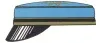
On 7 December 1927 Unitas Lettgalica turned itself fully into a student fraternity, vouching for the A!K!K! with Talavija and adopting the colours blue, black and gold, the motto “Vires unitae agunt” (in unity is strength) and the principles: work, concord, homeland. So that its name would not collide with those of other Latvian student fraternities, Unitas Lettgalica renamed itself Lacuania, which means the Land of Lakes (Latin lacus, a lake). In their symbolic sense the colours of Lacuania, blue, black and gold, say: under the blue skies of the homeland, doing black (hard) work, you will reap golden fruit. The motto, Vires unitae agunt, underlines the blessing of work done in harmony and concord.
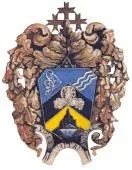
On 12 May 1931 Lacuania was admitted to P!K!. On 17 November 1932 the flag of Lacuania was consecrated. On 25 January 1937 the rector of the University of Latvia, Professor J. Auškaps, unveiled, and His Excellency Bishop J. Rancāns consecrated, the coat of arms of Lacuania, carved by the wood sculptor L. Regūts after a design by the artist V. Krauze. The number of Lacuania’s members grew fast, and at the fraternity’s 10th anniversary it was approaching 200. Most of its members came from Latgale, for an unwritten regional principle had been laid in the foundations of the fraternity. Attached to Lacuania was a Philisters’ Society, which gave material support to the active convent and to individual members. With its flag and its full membership Lacuania took part in the commemoration of 15 years since the liberation of Latgale and in the consecration of the monument to the liberation of Latgale in Rēzekne. In the spring of 1939 Lacuania presented a flag with the inscription “Pie tēvu zemes dārgās ķeries klāt” (Hold fast to the dear land of your fathers) to the Rēzekne State Gymnasium.
Lacuania has a great part in Latvian public and cultural life, for it is to the credit of its members that in the last years of the state the Latvian harmony of the regions and their understanding in common work were set on so active a course. With Lacuania the Latvian of Latgale regained his self-confidence and took his place as an equal in the work of the state, of society and of the creative spirit. From among its members came many statesmen, bishops, generals and others. In the Year of Terror many were deported and died in exile in Siberia, or after returning to the homeland. Many members of Lacuania likewise gave their lives in the Second World War in the fight for the freedom of the homeland.
The occupying power put an end to the work of Lacuania in the autumn of 1940. It was partly restored in Latvia during the Second World War, and after the war the members of the convent who had reached the free world restored its work in full. The active work of the convent goes on in chapters, each of which usually covers one country, while the convent as a whole is represented by a presidium elected by all its members. In the period of exile many new students have joined the family of Lacuania. The number of members is approaching 70. In exile four honorary philisters, papal prelates, have joined Lacuania: Dr K. Ručs (the representative of Latvians and Estonians at the Vatican), Dr L. Vārna, Professor Dr S. Ladusāns and Dr B. Kokins. They are today the highest clergy in exile.