

The Latvian student fraternity Patria was founded on 20 September 1926 in Riga and is the direct continuation of the Union of Latvian Students of Riga, founded in the autumn semester of 1907 at the Riga Polytechnic Institute, whose statutes the leadership of the institute approved on 26 November 1907. The union began its work on 25 January 1908, when its first officers were elected. It worked in Riga until 1915, when because of the war the Riga Polytechnic Institute was moved to Moscow, where the union also resumed its work. During the First World War the members of the union were very active in organising the fighting units of the Latvian Riflemen, and one of its members, K. Glīzdiņš, was in fact the initiator of the founding of the riflemen’s regiments and one of the most prominent organisers of that cause.
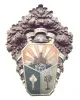
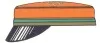
When the University of Latvia was founded, the Union of Latvian Students of Riga resumed its work as early as 1919. On 25 January 1923 the union renamed itself the student society Patria, introduced a new order of internal life and adopted the motto “Par draudzību un darbu, par Tēvijas brīvi” (For friendship and work, for the freedom of the fatherland), and also began to use a two-coloured ribbon of orange and green. On 20 September 1926 the student society turned itself into the fraternity Patria and adopted the colours light orange, green and gold and a second motto, Fidei et veritati, whose heraldic signs were designed by the artist J. Madernieks and are rendered in the gold embroidery of the colour cap. The members of the fraternity vouched for the A!K!K! with the fraternity Talavija. Patria was admitted to the Presidium Convent on 20 November 1928. The fraternity’s coat of arms was designed by the sculptor K. Zāle and carved in wood by the woodcarver L. Regūts. The coat of arms restored outside Latvia was made by the artist and woodcarver Hugo Mercs, a philister of Fraternitas Academica.
Patria was the presiding convent of P!K! in the 2nd semester of 1931, when the foundations of the Freedom Monument were consecrated, and a second time in the 2nd semester of 1939. Patria presided over L!K!A! in the academic year 1973/74.
Many members of the fraternity Patria took part in the battles of the Latvian Riflemen’s regiments in the First World War, and later, in Latvia’s War of Independence, many fought in Kalpaks’ battalion, the Cēsis Schoolboys’ Company and the ranks of other units, where 3 were awarded the military Order of Lāčplēsis for merit in battle, one of them the 1st class of the order. In the Second World War, too, many members of Patria fought for the freedom of Latvia, this time in the units of the Latvian Legion. In memory of Latvia’s War of Independence the fraternity formed close and friendly ties with the 5th Cēsis Infantry Regiment.
In its Riga period the fraternity had, from its founding in 1926, a Philisters’ Society, which united 168 philisters.
In 1939 the Philisters’ Society bought a property for the fraternity in Riga, at Stabu iela 32.
As a result of the occupation of Latvia by the Soviet Union and of the Second World War, the fraternity lost about 200 of its members. After the Second World War the fraternity restored its work first in Germany and later also in the USA, Canada, Australia, England and Sweden.
At present the fraternity has 232 philisters, commilitones and new members, and in the whole time of its existence about 570 members have sworn the oath to the flag of Patria.